Level 1 of 3
Beginner
- Stance, guard and basic footwork
- Throwing the jab and cross correctly
- Simple combinations on bags and pads
- Wrapping your hands
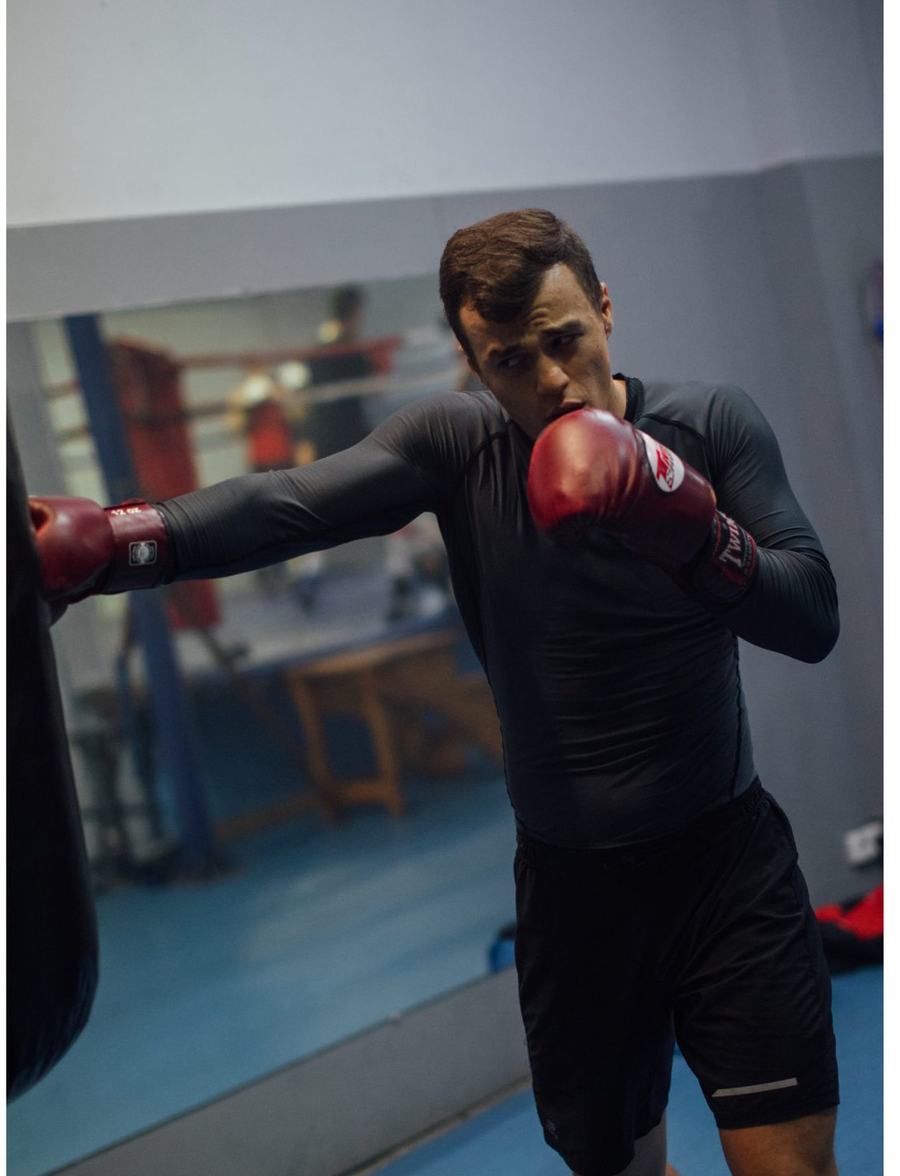
The sweet science
Punches, footwork, and boxing strategy. Ideal for improving hand-eye coordination and conditioning.
The basics
Boxing is a striking sport that uses only your fists. You learn to throw clean punches from a solid stance, move your feet to control distance, and defend yourself by slipping, blocking and rolling with shots.
It looks simple, but there is a lot of strategy in it: timing, rhythm and reading your opponent. That is why it is often called the sweet science. You can train it purely for fitness, or go on to spar once you are ready.
6Benefits
What people get out of it, in the gym and outside it.
Rounds on the bag and pads build cardio, stamina and shoulder endurance fast.
Hitting moving pads and reacting to a partner sharpens your timing and reflexes.
Learning to move, pivot and stay on balance improves agility in every sport.
A good guard, head movement and straight punches are useful skills to have.
Few things clear your head like a hard round on the heavy bag.
Drilling the same punch until it is sharp builds focus that carries into everyday life.
4The four punches
Every combination is built from four punches. Boxers number them, so you will hear coaches call out combos like 1-2-3.
A quick straight punch with your lead hand. It measures distance, sets up everything else and is the punch you will throw most.
A straight punch with your rear hand, driven by turning your hips and shoulders. Usually your most powerful straight shot.
A short, curved punch to the side of the head or body, thrown with a bent arm and a pivot of the lead foot.
A rising punch that travels up the middle, ideal at close range and when an opponent leans forward.
Numbering is for an orthodox (right-handed) stance; southpaws mirror it. Some gyms number hooks and uppercuts differently.
3Progression
A typical path from your first class onwards. Each gym sets its own curriculum, so check the class description when you book.
Level 1 of 3
Level 2 of 3
Level 3 of 3
4Parts of a class
Most boxing classes follow the same rhythm. Here is what to expect when you walk in.
Skipping, shadow boxing and mobility to get your heart rate up.
The coach breaks down a punch, combination or defensive move.
Timed rounds on the heavy bag or holding pads with a partner.
A finisher of core and bodyweight work. Sparring is optional and never forced on beginners.
What to bring
Wraps protect your wrists and knuckles inside the gloves. Many gyms lend gloves for a first class; check the class listing.
A T-shirt, shorts or joggers, trainers and a water bottle. A gum shield is needed if you join sparring.
Find a gym near you, choose your slot and pay for that session only. No membership, no contract.
?Boxing FAQ
Something else? Send us a message.
No. Many people box purely for fitness and technique. Sparring is optional and is only introduced once you are comfortable with the basics.
Yes. Boxing focuses on punches, footwork and strategy, and it is ideal for improving hand-eye coordination and conditioning.
Yes. Classes are designed to meet your level of experience, from beginner to advanced, so you can start from scratch.
It depends on the gym. Many lend gloves for your first sessions. Check the class details when you book, and bring hand wraps if you have them.
No. With Gear Up MMA you book and pay per session, so you can train as often or as rarely as you like.